Breast cancer remains one of the most diagnosed cancers among women worldwide, yet early detection significantly improves treatment outcomes and survival rates. While mammograms and clinical examinations play crucial roles in screening, monthly self-examinations offer women a simple, cost-free method to monitor their own health and identify changes that warrant medical attention. Understanding how to perform these checks correctly and consistently can make a substantial difference in catching abnormalities early.
Why Monthly Self-Examinations Matter
Most breast cancers are discovered by women themselves during routine activities or self-checks. Familiarity with your own breast tissue establishes a baseline that makes it easier to notice subtle changes over time. These changes might include new lumps, thickening, dimpling, skin texture alterations, nipple discharge, or unusual pain. While many changes are benign, detecting them early allows for prompt medical evaluation and, if necessary, early intervention when treatment is most effective.
The best time to perform a self-examination is about three to five days after your period starts, when breast tissue is least likely to be swollen or tender. Women who no longer menstruate should choose a consistent day each month, such as the first day, to maintain regularity. Consistency matters more than perfection-developing the habit of checking monthly creates familiarity that makes spotting changes easier.
The Complete Examination Process
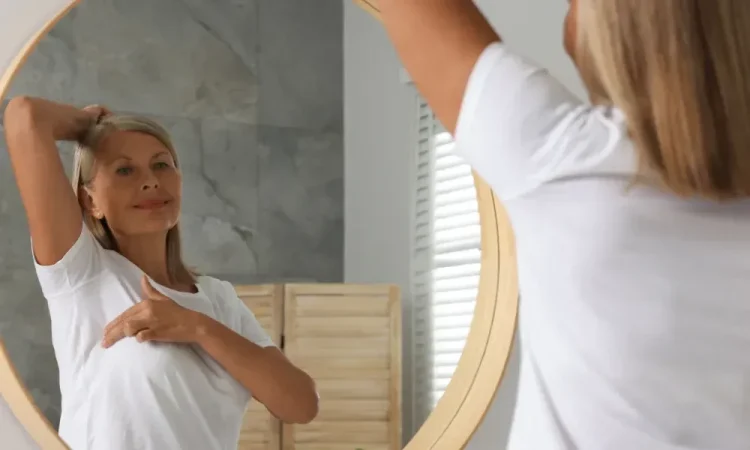
A thorough self-examination involves both visual inspection and manual palpation. Begin by standing in front of a mirror with your shoulders straight and arms at your sides. Look for visible changes in size, shape, symmetry, or contour. Check for dimpling, puckering, or skin that appears different in texture. Examine your nipples to ensure they haven’t changed position or become inverted.
Next, raise your arms overhead and look for the same changes from this position. Different arm positions can reveal abnormalities that aren’t visible otherwise. Check for any fluid discharge from the nipples-particularly if it’s clear, bloody, or occurs without squeezing. While milky discharge can be normal in some circumstances, any unexpected discharge warrants medical evaluation.
Manual Palpation Techniques
The manual portion can be performed lying down, standing, or in the shower, where soapy hands glide more easily over skin. Many women find lying down most effective because breast tissue spreads evenly over the chest wall in this position. Place a pillow under your right shoulder and put your right arm behind your head. Using your left hand, examine your right breast with the pads of your three middle fingers, keeping them flat and together.
Use three different pressure levels at each location: light pressure to feel tissue closest to the skin, medium pressure to feel deeper tissue, and firm pressure to reach the tissue closest to the chest wall and ribs. Move in a systematic pattern-either in circles starting from the outside and spiraling inward, in vertical strips from top to bottom, or in wedge sections from the outside toward the nipple. The key is covering all breast tissue, including the area extending to the collarbone, the armpit, and beneath the breast.
Learning the Proper Technique
While written descriptions provide guidance, visual demonstrations and professional instruction help ensure you’re performing examinations correctly. Healthcare providers can teach proper hand positioning, appropriate pressure levels, and systematic coverage patterns during routine appointments. Many multispecialty hospitals offer educational resources and clinical demonstrations to help women develop confidence in their examination technique. For instance, detailed guidance on breast self examination steps is available through specialized healthcare centers in Abu Dhabi, where medical professionals provide comprehensive instructions tailored to individual needs and concerns.
Remember that breast tissue naturally feels lumpy and uneven. Normal findings include the firm ridge along the bottom of each breast, small bumps that may be enlarged milk glands, and areas of different texture throughout. The goal isn’t to identify every normal variation but to recognize changes from your personal baseline. If something feels different from previous months or appears in only one breast, it’s worth discussing with your doctor.
When to Seek Medical Evaluation
Certain findings require prompt medical attention. A new lump or hard knot, especially if it feels different from surrounding tissue, should be evaluated regardless of whether it’s painful. Changes in breast size or shape, persistent swelling, skin dimpling or puckering, nipple retraction or inversion, redness or scaling of the nipple or breast skin, and bloody or clear nipple discharge all warrant examination by a healthcare provider.
It’s important to note that most breast lumps are not cancerous. Fibrocystic changes, cysts, and fibroadenomas are common benign conditions that can cause lumps or thickening. However, only proper medical evaluation can determine whether a finding is benign or requires further investigation. Don’t let fear of bad news delay seeking assessment-early detection of any problem, cancerous or not, leads to better outcomes.
Complementary Health Practices
Self-examinations work best as part of a comprehensive approach to breast health and overall wellness. Regular clinical breast examinations by healthcare providers, appropriate mammography screening based on age and risk factors, and maintaining general health all contribute to early detection and prevention. Lifestyle factors including maintaining a healthy weight, regular physical activity, limiting alcohol consumption, and avoiding tobacco support both breast health and general well-being.
Nutrition also plays a supporting role in maintaining optimal health. While no specific food prevents breast cancer, a balanced diet rich in fruits, vegetables, whole grains, and lean proteins supports immune function and cellular health. Some research suggests that certain nutrients beyond standard multivitamins may offer additional health benefits, though supplementation should be approached thoughtfully and discussed with healthcare providers to ensure appropriateness for individual needs.
Building the Monthly Habit
Consistency transforms self-examination from an occasional task into a reliable health practice. Set a monthly reminder on your phone or calendar. Some women tie their examination to another monthly event, like paying bills or changing air filters, to maintain regularity. The few minutes invested each month can provide peace of mind and potentially life-saving early detection.
If you’re uncertain about your technique or uncomfortable performing self-examinations, discuss this with your healthcare provider. They can demonstrate proper methods during your next appointment and address any concerns about what’s normal for your body. Women with breast implants, those who have undergone breast surgery, or individuals with dense breast tissue may need specific guidance tailored to their situations.
Access to Quality Healthcare Resources
The UAE has made significant investments in healthcare infrastructure, bringing world-class medical facilities and expertise to the region. Advanced diagnostic imaging, subspecialty cancer care, and comprehensive women’s health services are now readily available to residents and international patients. Recent healthcare quality rankings demonstrate the high standards achieved by leading medical centers in Abu Dhabi, reflecting a commitment to excellence in patient care and clinical outcomes across multiple specialties.
Self-examination serves as the first line of personal monitoring, but it complements rather than replaces professional screening and clinical evaluation. Understanding your own body, knowing what’s normal for you, and acting promptly on concerning changes creates a powerful combination for maintaining breast health throughout your life. The minutes you invest each month in self-examination represent an investment in your long-term health and well-being.